Earlier this week, I posted on how easy it is to stretch and enrich your meals using scraps and leftovers. For example, got a salad that’s less than fresh? Wilt it in melted fat and cook as for greens along with a fresher vegetable.

Clockwise from the left: mushrooms radicchio, buttered zucchini, and moist-method baked chicken.
Now, one of the ways that you can reduce your energy output in the kitchen is to work ahead. This is great for large families or managing chronic illness. Don’t be fooled by the jargon, though. “Once-a-month cooking” and “freezer meals” still means serving leftovers, so be sure to compensate with extra flavor or freshen-up methods for reheating.
Baking potatoes for dinner? Bake a few extra. It takes no extra energy to add more potatoes to the oven, but will save time and energy later when you use cooked potatoes to speed up a recipe. In fact, par-cooking your potatoes makes the best home fries.

Baked potato cubes, reheated in hot bacon drippings with a little salt and garlic powder. Look at that gorgeous crust.
Baking a chicken? Why not bake two? I do this every time. There are multiple baking methods, each with its weaknesses and strengths. Serve fresh chicken the first night for the prettiest presentation, and then use the cooked flesh and broth the rest of the week in other recipes.
Moist-baking produces the most gelatin rich broth without any second steps, but produces a flabby skin without any golden, crispy bits. It’s also the easiest, aside from boiling, to remove meat from the carcass.
Dry-roasting is great for a lovely presentation of whole-roasted chicken. The broth made from the carcass has a gorgeous dark color and richer, meatier taste owing to the natural glutamic acids created during the roasting process. The breast meat can be dry with this method, which can be corrected in several ways.
Spatch-cocking is fun to say, but harder to do if you have joint pain or weak hands. You get the golden color and crisp skin of roasting as well as the moister meat from a shorter cooking time. This method produces the least quantity of gelatinous broth, so you’ll definitely want to boil the carcass.
Speaking of broth, you haven’t been throwing those bones away, have you? Soup stock from the carcass of roast meats is a time-honored tradition in many cultures, including the hallowed French kitchens of cooking history. In addition to being the base of all fine seasonings, warm stock with high gelatin content is used medicinally throughout the world. It’s both soothing and strengthening, assists in digestion, and protects protein for absorption.
In addition to being a wonderful beverage and soup starter, broth makes a great substitute for water when cooking rice and other vegetables. You can also freeze it in cubes and use it as a seasoning or in sauces.
This week’s baked chicken became a dinner entrée, stuffing for a baked potato, and sandwich meat for my husband’s lunches. Half the broth was used in a lunch of quinoa/bulgur grain mix, and I am seeing some amazing rice in our near future. The last of the meat will either go into a quick soup or a chopped salad, but the possibilities are limitless.
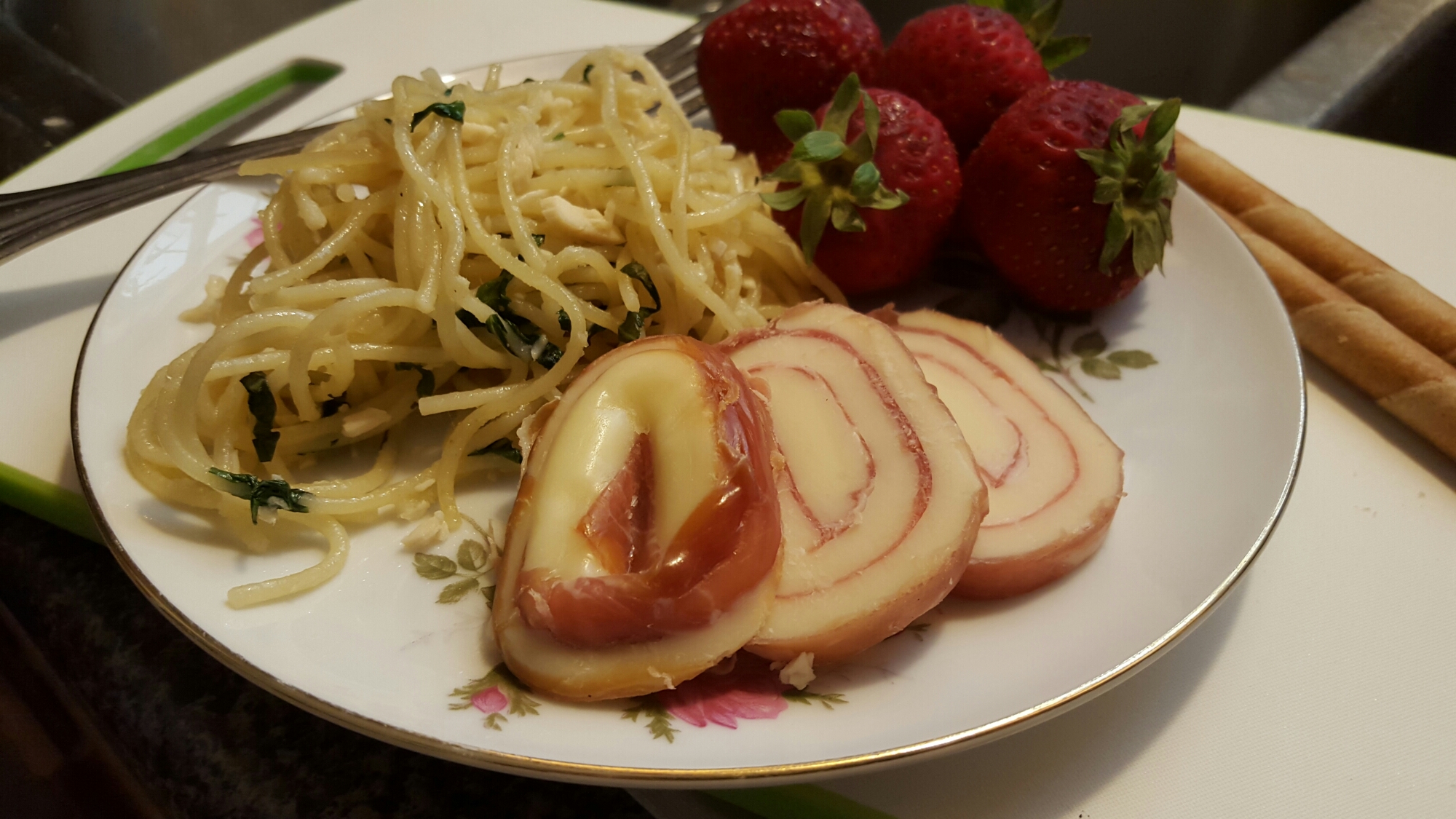
Clockwise from the left: leftover parmesane pasta reheated with crumbled chicken and fresh basil; strawberries, and prosciutto-wrapped mozzarella slices.
 Guests Are Family